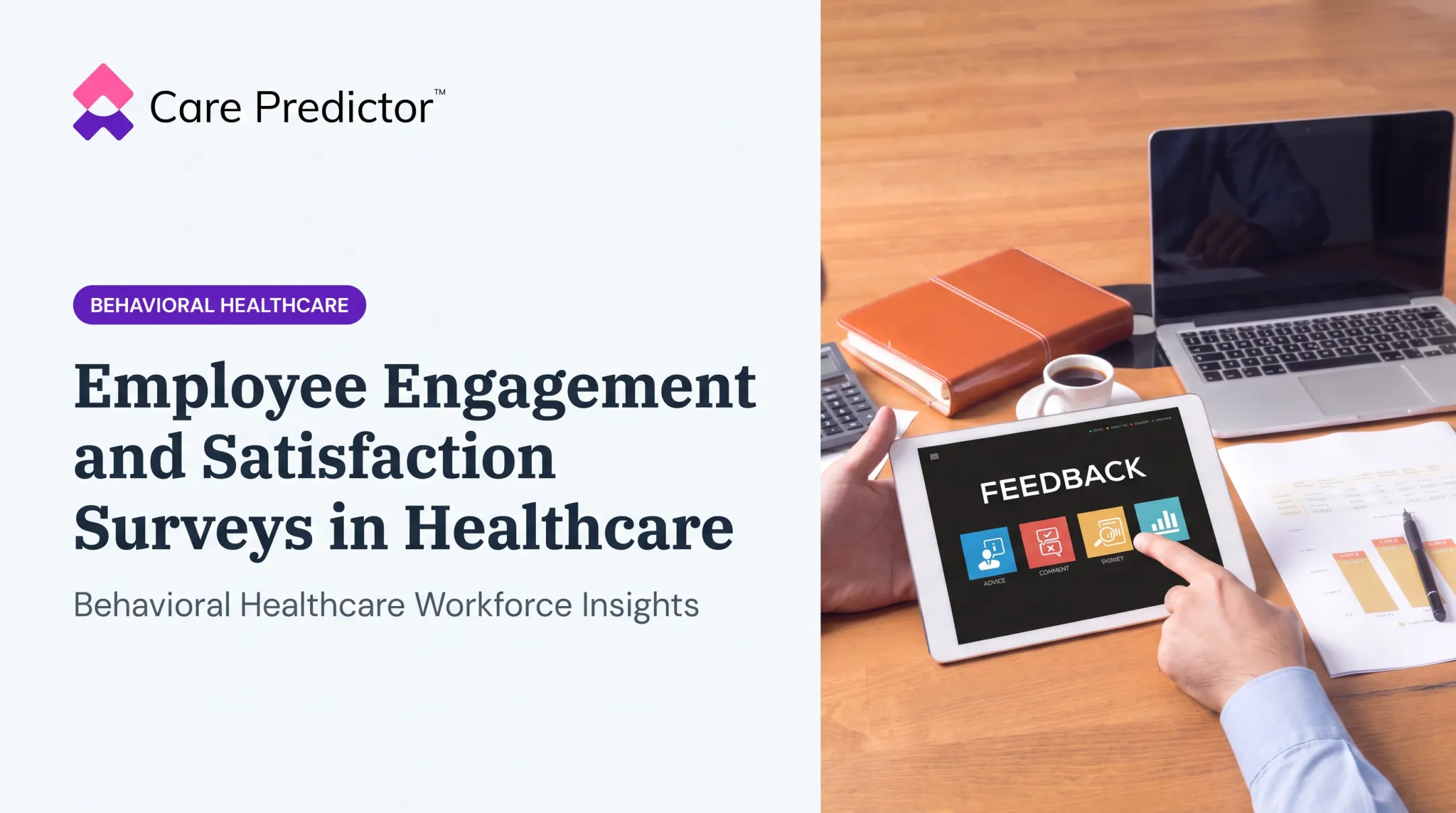
Engagement isn't the same as job satisfaction or a round of applause at a staff meeting. It's whether employees feel connected to the mission, backed by their leaders, equipped to do good work, and motivated to show up fully for patients and each other.
This article breaks down why engagement matters for both staff and patients, what gets in the way, what actually works, and how to measure whether any of it is making a difference.
Key Takeaways
- Treat engagement as a patient-care priority, not just an HR checkbox
- Staffing pressure, burnout, and weak follow-through quietly erode engagement over time
- Pair employee listening with visible action, better leadership, and realistic staffing
- Track engagement alongside retention, safety, and patient experience data, not in isolation
Why Employee Engagement Matters in Hospitals
Healthcare employee engagement is the emotional commitment and willingness to contribute that staff bring to their roles, their teams, and their patients. It's different from satisfaction (do I like my job?) or morale (am I in a good mood this week?). Engagement is about connection and investment, and it tends to hold up better under pressure.
Engagement Shapes the Patient Experience
Engaged employees communicate more clearly, collaborate across departments, and notice the small signals that something's off with a patient. The link shows up in the data, too: hospitals in the top quartile for engagement are 4.2 times more likely to land in the top quartile for patient experience, according to Press Ganey's 2026 report. That's an association worth paying attention to, even though it doesn't prove engagement alone causes better scores.

Engagement Underpins Psychological Safety
Staff need to feel safe reporting hazards, near misses, and incivility without fear of blowback. Confidence in leadership and a sense of psychological safety are consistently tied to higher rates of speaking up and error reporting, while fear and self-preservation shut that reporting down, according to AHRQ's 2023 review. A hospital can have the best incident-reporting system in the world and still miss problems if people are scared to use it.
Engagement Drives Retention and Team Stability
Disengaged employees are far more likely to walk out the door. Press Ganey's analysis of 2.3 million U.S. healthcare workers found disengaged staff are 1.7 times more likely to leave, and RNs reporting low teamwork scores are 1.53 times more likely to resign. Every departure means a rushed onboarding, a short-staffed shift, and a disrupted care team.
Behavioral Health Adds Another Layer
In residential and outpatient behavioral health settings, continuity matters even more. A strong therapeutic alliance can cut dropout rates in half, and research consistently identifies therapist turnover as a predictor of early treatment dropout. When a clinician leaves mid-treatment, the patient loses more than a staff member : they lose a relationship that was doing clinical work.
Barriers That Make Hospital Employee Engagement Difficult
Engagement programs fail for predictable reasons. Most of them trace back to conditions, not attitude.
Staffing Pressure and Workload
Understaffed units, mandatory overtime, and unpredictable schedules make engagement initiatives feel hollow. It's hard to care about a wellness webinar when you haven't had a lunch break in three shifts. Administrative burden compounds the problem, pulling clinical staff away from the patient care that drew them to the field in the first place.
Burnout and Safety Risks
Burnout, incivility, and workplace violence are interconnected risks that chip away at engagement from different angles:
- 45.6% of health workers reported feeling burned out often or very often in 2022, according to CDC survey data
- Healthcare and social assistance workers account for roughly 73% of nonfatal workplace violence cases across private industry
- Behavioral health staff face additional strain from workload, limited control, and values mismatches on the job

Fragmented Communication
Employees fill out surveys. They attend town halls. Then nothing visible changes, and they stop bothering. Closed-loop communication (telling staff their feedback was heard, explaining the decisions made, and reporting progress) is one of the most reliable ways to rebuild trust after a listening exercise. Skip that step, and the next survey gets ignored.
Practical Strategies to Improve Employee Engagement in Hospitals
Fixing engagement means combining honest listening with action people can actually see.
Build a Listening-and-Action Cycle
- Combine annual surveys with shorter pulse checks, listening sessions, and rounding
- Segment results by department, shift, and tenure where confidentiality allows
- Pick a small number of priorities, assign an owner to each, and report back on progress
Strengthen Frontline Leadership
Managers make or break engagement. Train them in coaching, conflict resolution, and workload conversations. Set an expectation for regular one-to-ones that focus on removing obstacles, not just collecting complaints.
Then measure whether managers follow through.
Redesign the Work, Not Just the Culture
Workflow friction (clunky handoffs, excessive documentation, chasing down supplies) drains energy that should go toward patients.
A multi-hospital trial that restructured physician teams, co-leadership, and interprofessional rounds improved nurses' teamwork climate scores from a median of 80 to 88. It did not move length of stay or readmissions. Track workforce experience and clinical outcomes as separate goals rather than assuming they move together.
Make Recognition Meaningful
- Keep recognition timely, specific, and tied to patient-care values
- Include peer recognition across clinical, behavioral health, and support roles
- Never let recognition substitute for safe staffing or fair pay
Invest in Development
Define what employees can expect at each stage: recruitment, onboarding, early tenure, performance conversations, and advancement. Offer cross-training, mentoring, and support for certifications. New-hire feedback in the first 90 days tells you fast whether someone feels prepared and included.
Reach Every Shift
Night shift, weekend staff, and multi-site employees get left out of engagement efforts constantly. Use channels that actually reach them, involve diverse roles in decisions, and protect confidentiality so people feel safe telling the truth.
How Hospitals Should Measure Employee Engagement and Outcomes
A good engagement survey measures connection to purpose, trust in leadership, recognition, workload, resources for the job, growth opportunities, teamwork, psychological safety, and intent to stay. That differs from a satisfaction survey (do you like coming to work?) or a burnout instrument like the Maslach Burnout Inventory, which targets exhaustion and depersonalization specifically.
Use the Right Survey at the Right Time
- Baseline engagement survey: broad annual diagnosis across the organization
- Pulse surveys: quick reads after a major change, staffing shift, or safety event
- Lifecycle surveys: at recruitment, onboarding, 30/60/90 days, and exit
- Qualitative comments: explain why the scores moved, not just that they did
Organize Metrics Into Three Buckets
| Category | Examples |
|---|---|
| Leading indicators | Survey participation, sentiment, recognition activity, manager follow-through |
| Workforce outcomes | Retention, regrettable turnover, absenteeism, overtime, agency reliance |
| Care outcomes | Patient experience, safety reporting, treatment completion, therapeutic alliance |
Interpret Results Responsibly
Compare trends over time, not isolated department rankings. Check whether engagement shifts alongside staffing or leadership changes before assuming cause and effect. Set a baseline, assign an owner, and review on a fixed cadence; quarterly works for most units.
Say a unit's workload score drops two points in a quarter. Instead of guessing, leaders pull comments, find scheduling as the top complaint, pilot self-scheduling for 90 days, and remeasure. That's the cycle: listen, analyze, prioritize, act, communicate, measure again.

This is where platforms built for behavioral health workforces add real value. Care Predictor's employee feedback tools combine anonymous engagement surveys with automated onboarding pulse checks at 30, 60, and 90 days, and use AI to flag sentiment trends in open-ended comments before someone decides to quit.
A dashboard that connects turnover, treatment completion, and survey sentiment in one view makes that quarterly review much faster to run.
Applying Workforce Intelligence Across the Employee Lifecycle
Most hospitals still treat engagement as one annual survey disconnected from hiring and onboarding. Connecting pre-hire assessment, structured interviewing, onboarding feedback, and retention data gives a fuller picture, without replacing the judgment of hiring managers and clinical leaders.
Care Predictor is one example of this approach applied specifically to behavioral health and addiction treatment settings, including programs operating within or alongside hospital systems. Its platform pairs a pre-hire Care Profile assessment covering 24 research-backed behavioral attributes with ongoing engagement surveys and manager-effectiveness feedback. Organizations get a signal before the hire and throughout employment, not just once a year.
A few ground rules matter here:
- Use workforce data to spot where people need support or training, not to label individuals or make blanket predictions
- Define clear access and governance standards for sensitive employee data
- Start with one department or lifecycle stage, set a baseline, involve frontline leaders, and scale only after reviewing real results
Internal data from one behavioral health therapist study across five organizations found that therapists scoring above 70 on the Care Predictor Index saw higher treatment completion and lower rates of discharge against medical advice. Workforce fit and patient outcomes are linked, even when the exact mechanism varies by setting.
Frequently Asked Questions
How to improve employee engagement in healthcare?
Combine regular employee listening with visible follow-through, supportive frontline leadership, meaningful recognition, development opportunities, safer workflows, and realistic staffing. Then measure both workforce and patient-care outcomes together, not separately.
What does an employee engagement survey measure?
It typically covers connection to purpose, trust in leadership, recognition, teamwork, access to resources, growth opportunities, psychological safety, and intent to stay. This is distinct from satisfaction surveys or burnout instruments, which measure different things entirely.
What are the best employee engagement surveys?
The best approach combines a validated organization-wide baseline survey, shorter pulse surveys, lifecycle surveys at key employment milestones, and qualitative listening sessions. Choose tools that produce confidential, role-specific, actionable results.
What are the top 5 employee engagement activities?
Employee listening paired with visible follow-through, meaningful recognition, manager one-to-ones or rounding, professional development opportunities, and team-based improvement projects. All five work better together than in isolation.
Why does employee engagement matter?
Engagement connects directly to teamwork, psychological safety, retention, and patient experience. But engagement activities alone won't fix anything if working conditions like staffing and workload don't improve alongside them.
What are the top 5 KPIs in healthcare?
Hospitals commonly track patient experience, safety and quality indicators, workforce retention or turnover, absenteeism and staffing stability, and productivity or financial performance. The exact mix should match each hospital's specific goals and care model.